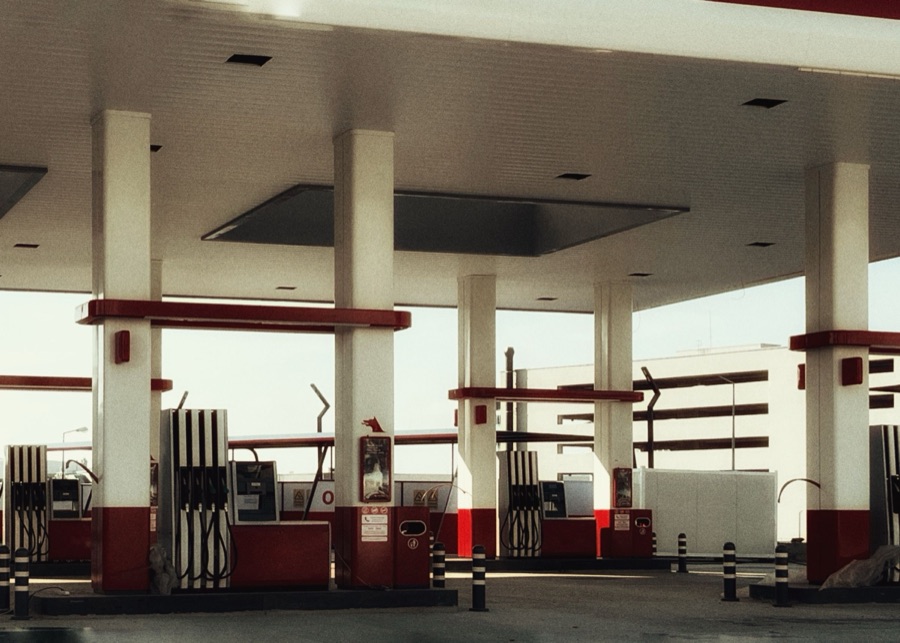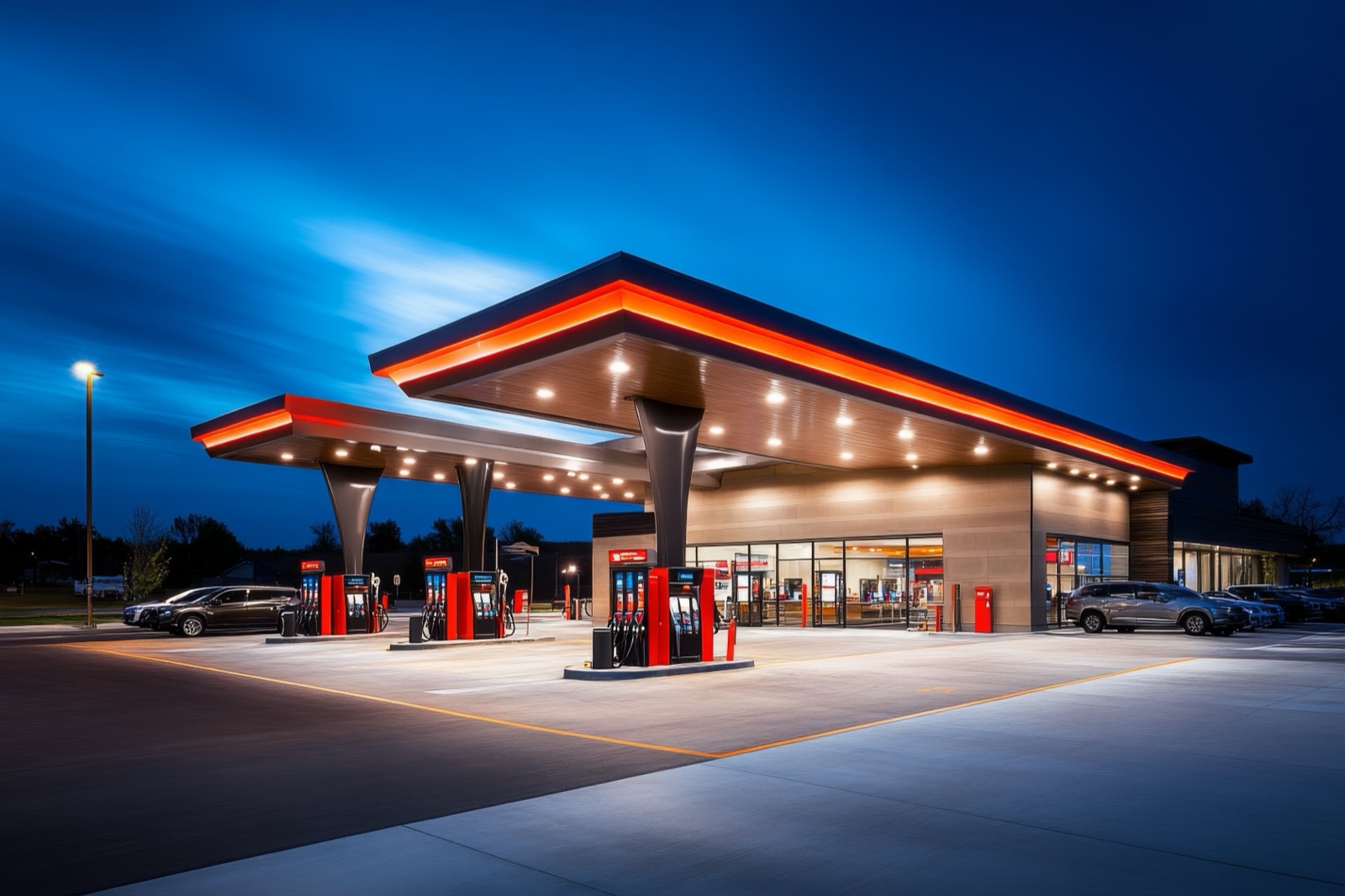
A Marathon location trades as a branded fuel asset, which means the brand image standards, the fuel supply contract, and the underlying real estate all factor into value at once. Buyers pay attention to the canopy, signage, and store condition because branded sites carry image and reset obligations that an unbranded site does not. For sellers, that branding can support traffic and a cleaner story to lenders and 1031 buyers. National fuel and C-store cap rates run about 5.6%, roughly 5.58% with fuel income included and 6.87% without it. Whether you are buying your first site or trading out of one, the Marathon brand affects price, financing, and how a deal is structured. Our buy-side practice and sell-side practice handle both ends.
What a Marathon gas station deal involves
A Marathon transaction can be one of three things, and the structure drives the price. A business-only deal transfers the operation while the seller or a third party keeps the dirt. A combined deal moves the business and the real estate together. A real-estate-with-tenant deal sells the property to an investor who collects rent. Branded fuel adds a layer the buyer inherits, including the fuel supply contract and brand image standards tied to the Marathon name.
Each path prices differently. Business-only sells at 2.5x to 4.0x EBITDA, combined deals at 4.0x to 7.0x EBITDA, and real-estate-included deals near 8x EBITDA, reaching 7x to 9x in premium markets. Confirm which version you are pricing before you anchor on a number. Our valuation calculator runs all three.
Fuel supply, branding, and image obligations
The branded fuel agreement is the document that defines a Marathon deal. It sets the supply term, volume commitments, and the pricing the operator pays per gallon, and it typically requires the site to maintain Marathon image standards across the canopy, dispensers, and signage. A buyer steps into these obligations, so any pending image reset or remodel requirement should be priced into the offer before closing.
Confirm whether fuel comes direct or through a jobber, since that changes margins and who controls the brand relationship. In 2025, fuel gross margins averaged more than 40 cents per gallon, but net fuel profit is only a few cents per gallon. The store carries the profit, with in-store items at 20% to 40% margins and roughly 30% of revenue producing about 70% of profit. Our jobber supply guide and branded vs unbranded guide go deeper.
Who buys a Marathon gas station
Three buyer types compete for these assets. Owner-operators want a business they can run, often nets around 70K to 100K dollars per year at a small-to-medium site and 100K to 500K by location. Multi-site operators add scale and fold the site into existing fuel buying and management. Passive investors want the real estate with a tenant in place and care most about the cap rate and lease terms.
The branded fuel investor pool also includes 1031 exchange buyers replacing a sold property, who have 45 days to identify and 180 days to close and look for absolute NNN structures with 15 to 20 year terms. With about 152,000 US C-stores and roughly 60% single-store operators, the buyer base for a clean Marathon site is deep. See our branded listings and NNN listings.
How a Marathon site is valued and priced
Pricing starts with the income approach and a market cap rate. National fuel and C-store cap rates sit near 5.6%, about 5.58% with fuel income and 6.87% without it. Location moves the number. Florida runs near 5.11%, Texas about 5.63%, the Carolinas 5.0% to 5.5%, Tennessee 5.4% to 5.75%, and weaker markets 6.0% to 6.5% and higher. Top branded C-store tenants set the floor, with Wawa at 4.83% to 5.20%, 7-Eleven at 5.00% to 5.40%, Murphy USA near 5.13%, and Circle K at 5.35% to 5.65%.
Business value runs on multiples instead, 2.5x to 4.0x EBITDA business-only and near 8x when real estate is included. Fuel volume matters too, with a busy urban station moving 100,000 to 150,000 gallons per month against a US average near 4,000 gallons per day. Run scenarios in our cap rate calculator.
How to buy a Marathon gas station
Most acquisitions are financed. SBA 7(a) caps at 5M dollars, and special-purpose gas stations need a 15% minimum equity injection, so plan for 10% to 15% down, real estate terms up to 25 years, and June 2026 rates around 9% to 11.5% APR variable, with closings in 30 to 90 days. Conventional financing runs 30% to 40% down, and many banks avoid underground storage tanks because of CERCLA liability, with closings in 30 to 60 days.
Environmental review is mandatory on SBA fuel deals. Budget 1,800 to 3,500 dollars for a Phase I ESA under ASTM E1527-21, and order it early because tank findings can stop a deal. Confirm the Marathon supply agreement transfers and review any image obligations during diligence. Start with our financing page, our SBA 7(a) guide, and the due diligence checklist.
How to sell a Marathon gas station
A clean sale starts with organized financials and a confirmed fuel supply position. Buyers and their lenders will want fuel volume, in-store sales, and margin detail, plus the status of the Marathon supply agreement and any pending image reset. Resolving environmental questions before listing prevents a stalled closing later.
Price to the right buyer. An investor pays on cap rate, while an operator pays on a multiple of cash flow. Broker commissions run 10% to 20% on business-only deals and about 6% to 10% on real-estate-inclusive deals, with typical timelines of 3 to 6 months. A sale-leaseback is another path that separates the operating business from the real estate and can raise capital while keeping you in the store. See our sell-side page, our sale-leaseback service, and our sale-leaseback calculator.