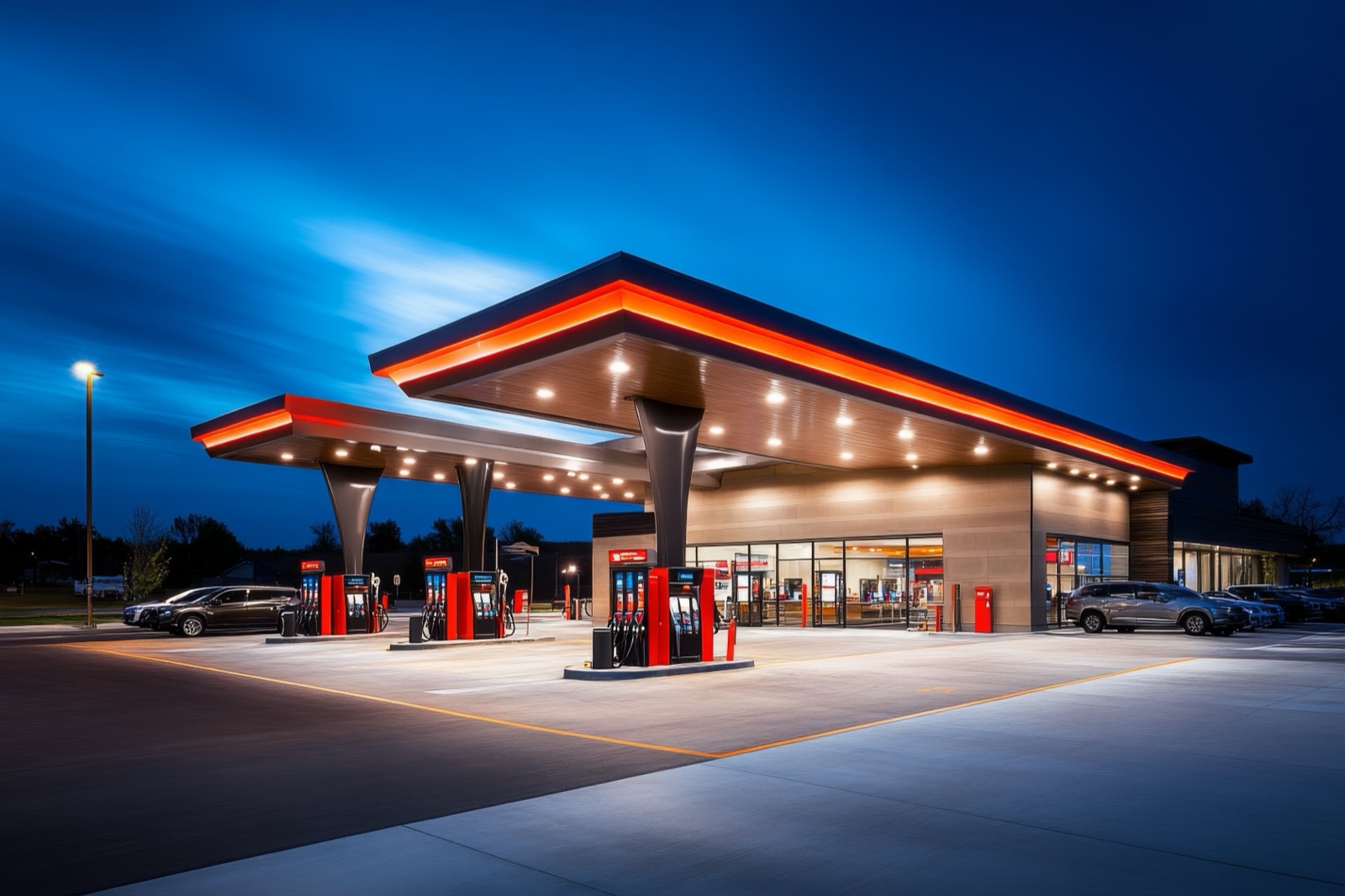
7-Eleven is the most recognized name in the convenience-store business, and that brand weight changes how a deal trades. A 7-Eleven gas station can come to market as a leased net-lease investment, as a franchise resale, or as fee-simple real estate with the store operation attached. Each path values differently. As a tenant, 7-Eleven supports cap rates in the 5.00% to 5.40% range, tighter than most branded competitors and a reflection of the credit and site selection behind the name. Buyers want the traffic and the recognition. Sellers want full value for both the dirt and the going concern. The work is sorting what you are actually paying for, then pricing the fuel, the c-store income, and the real estate correctly. We broker that work across the country from our base in Dallas.
What a 7-Eleven deal actually involves
The first question on any 7-Eleven is what is being sold. A corporate-owned or franchised location offered as a leased investment trades on the rent and the lease term, and the buyer never touches operations. A franchise resale transfers the business and the franchise agreement, with 7-Eleven approving the new operator. A fee-simple sale conveys the land, building, fuel equipment, and the going concern together.
These are not interchangeable. A passive NNN investment is priced on cap rate. A franchise resale is priced on cash flow and the franchise terms. A real-estate-inclusive operating deal blends both. Confirm the structure before you talk price, because the same physical store can carry very different numbers depending on what conveys. Our branded station listings include all three structures.
Cap rates and the 7-Eleven credit story
7-Eleven trades at cap rates of 5.00% to 5.40%, placing it among the strongest c-store credits. For context, Wawa runs 4.83% to 5.20%, Murphy USA sits near 5.13%, and Circle K trades at 5.35% to 5.65%. The national c-store average is about 5.6%, roughly 5.58% with fuel and 6.87% without it.
Geography moves the number inside that band. Florida is the tightest market near 5.11%, Texas runs about 5.63%, the Carolinas sit at 5.0% to 5.5%, and Tennessee falls between 5.4% and 5.75%. Weaker markets push past 6.0% to 6.5%. The brand brings pricing power, but lease term, location, and guarantor strength decide where a specific 7-Eleven lands. Run scenarios on our cap rate calculator or read more on cap rates by state.
Why NNN investors target 7-Eleven
Passive investors like 7-Eleven for the same reason lenders do. The name carries traffic, the locations are screened, and a long absolute net lease shifts taxes, insurance, and maintenance to the tenant. That structure is what 1031 buyers want when they trade out of management-heavy assets. Absolute NNN leases with 15 to 20 year terms make ideal 1031 replacement property.
If you are working an exchange, the clock is strict. You have 45 days from your sale closing to identify replacements and 180 calendar days to close. A leased 7-Eleven that fits inside that window solves the deadline and the cash-flow goal at once. Track your dates on the 1031 deadline calculator and read our NNN gas station investing guide.
How a 7-Eleven gets valued
Valuation follows the deal type. A leased 7-Eleven is income divided by cap rate, so a location netting 200,000 dollars at a 5.20% cap is worth roughly 3.85 million dollars. An operating store is valued on EBITDA. Business-only deals trade at 2.5x to 4.0x EBITDA, with smaller stores at 2.0x to 3.5x SDE. Combined fuel-and-store operations run 4.0x to 7.0x, and with real estate included the figure moves to about 8x, reaching 7x to 9x in premium markets.
The c-store side carries the value. It is about 30% of revenue but roughly 70% of profit, with in-store margins of 20% to 40%. Fuel posts high gross margins but only a few cents of net profit per gallon. Model both with our valuation calculator and the how to value a gas station guide.
How to buy a 7-Eleven location
Financing a 7-Eleven works like any fuel deal, with the brand helping on lender comfort. SBA 7(a) caps at 5 million dollars and requires a 15% minimum equity injection on special-purpose gas stations, so plan 10% to 15% down. Real estate terms run up to 25 years, and June 2026 rates are roughly 9% to 11.5% APR variable, with closings in 30 to 90 days. Conventional financing wants 30% to 40% down, and many banks avoid underground storage tanks because of CERCLA liability.
Every fuel acquisition needs a Phase I ESA at 1,800 to 3,500 dollars under ASTM E1527-21, and it is required for SBA fuel deals. Start with our buyer representation, the how to buy a gas station guide, and the SBA 7(a) loan walkthrough.
How to sell a 7-Eleven
Selling a 7-Eleven starts with deciding what you are selling. A franchisee selling the business needs 7-Eleven to approve the buyer, so the marketing has to find a qualified operator, not just a check. An owner of the fee-simple real estate can sell to a net-lease investor, often at the tighter cap rates the brand commands. The right structure depends on what you hold and what you want from the exit.
Plan for time and cost. Sale timelines typically run 3 to 6 months. Business broker commissions are 10% to 20% on business-only deals and roughly 6% to 10% when real estate is included. If keeping operations is the goal, a sale-leaseback frees the real estate equity while you stay in place. Start with our seller services and the how to sell a gas station guide.